

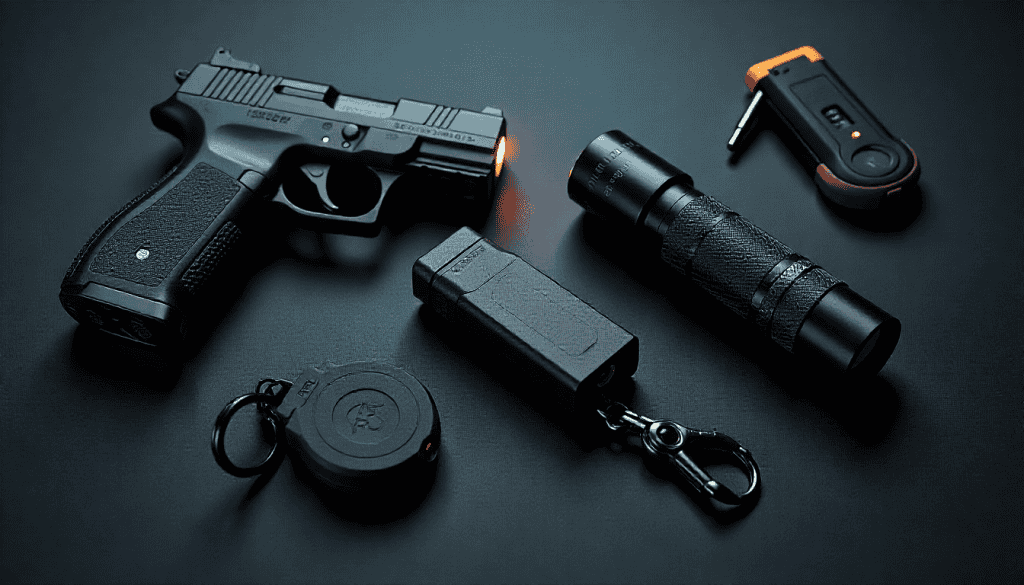
A woman walking home after night class reaches for her keys — but instead of dread, she feels a small click of confidence: a personal alarm clipped to her bag. That click can change everything. It’s simple. It’s powerful. And it’s exactly why non-lethal self-defense gadgets are booming.
People want safety. They don’t always want violence. Enter a new generation of personal safety devices: compact, smart, and designed to stop threats without causing lasting harm. Below I explain why these tools matter, how they work, which ones perform best in real life, and how to choose the right mix for your daily routine.
Why Non-Lethal Tools Are Trending Now
Society is changing fast. We commute later, travel more, and move through dense cities where help can be minutes away — or farther. At the same time, many people no longer want the legal complications, moral weight, or training requirements that come with lethal options.
Non-lethal gadgets hit a sweet spot: they’re accessible, affordable, and effective at doing the one thing you really need in a dangerous moment — creating space to escape. They give people back a piece of confidence. And confidence is often the first line of defense.
What “Non-Lethal” Really Means
Non-lethal doesn’t mean useless. It means designed to incapacitate, startle, or disorient without intending to kill. Examples include:
- Personal alarms — sonic devices that attract attention.
- Pepper spray — chemical deterrents that impair vision and breathing for a short time.
- Tactical flashlights — bright beams that disorient and help you see.
- Stun devices (where legal) — deliver short, incapacitating pulses.
- Tactical pens and keychain tools — discreet, dual-use implements for close contact.
Each tool has a role. Together they form a layered — and humane — safety strategy.
The Importance of Choosing Non-Lethal Options for Everyone’s Safety
Non-lethal options matter because they protect lives — both yours and other people’s. Violence escalates fast. A small decision in the moment can become a lifelong tragedy. Choosing non-lethal weapons shifts the focus from “fight to win” toward “escape and survive.” That’s a different ethic. It’s safer for the user, safer for bystanders, and safer for the community.
Women, in particular, benefit from solutions designed around accessibility and ease of use. Personal safety for women isn’t just a marketing phrase; it’s about tools that fit pockets, purses, and routines. Tools that can be activated under stress by someone who hasn’t trained for combat. A device that creates space to run is often enough.
There’s an ethical layer too. Ethical self-defense tools reduce the probability of permanent harm while still offering real deterrence. In cities and neighborhoods where community safety measures are adopted — better lighting, accessible emergency services, neighborhood watch programs — non-lethal tools act as an added, responsible layer of protection rather than a trigger for escalation.
Actionable steps you can take today:
- Favor devices that disable or disorient rather than injure.
- Pair gadgets with awareness training and a simple escape plan.
- Store and use them responsibly; treat them like medical or safety equipment, not toys.
In short: non-lethal options lower the stakes. They preserve life, reduce legal exposure, and make safety achievable for more people. That’s why they deserve a central role in any personal-safety plan.
Popular Types of Non-Lethal Self-Defense Gadgets and Their Uses
People want practical tools. Here are the most common self-defense gadgets, what they do, and how to use them smartly.
Personal Alarms — Personal alarms effectiveness
Small, loud, and immediate. Press a button and a shrill siren draws attention. Use it to startle an attacker and summon help. Best for crowded areas and transit commutes. Tip: clip it to the outside of your bag so you can reach it fast.
Pepper Spray & Pepper Spray Alternatives
Classic for a reason. Pepper spray creates immediate irritation that disables vision and breathing for a short period — enough to flee. Alternatives include gel sprays (less drift in wind), pepper foam (more targeted), and legal regional substitutes where chemical sprays are restricted. Tip: carry it accessible (not buried) and practice quick draws at home.
Stun Devices — Stun guns explained
Stun guns deliver a painful electric shock on contact. They’re close-range tools that can incapacitate temporarily. Where stun devices are legal and appropriate, they’re effective when used to create an escape window. Remember: aim to break contact and retreat immediately.
Tactical Flashlights — Tactical flashlights for safety
Bright beams do three things: reveal hazards, disorient an aggressor, and act as a blunt tool if needed. Choose a model with high lumen output and a strobe function for disorientation. Tip: the flashlight doubles as a daily utility item — you’ll carry it more often for that reason.
Self-Defense Keychains & Tactical Pens
Discrete and legal in many places. These items combine everyday utility with defensive capability. They don’t look like weapons, which is an advantage—less chance of legal trouble and less public alarm, yet they add reach and leverage in close encounters.
Whistles & Signal Devices
Old-school but effective. A loud whistle penetrates ambient noise and is easy to use even if you’re panicked. Pair a whistle with an app check-in or a personal alarm for layered signaling.
How to choose between them:
- Match the gadget to your routine (commute, jogging, nightlife).
- Balance legality and effectiveness — a device that’s illegal where you live isn’t useful.
- Prioritize ease of access and one-handed activation. Under stress, simple beats clever every time.
Final practical tip: build a small kit — alarm + light + spray/alternative — tailored to your life. Layered tools increase options and reduce single-point failures. Stay safe. Stay smart.
Choosing What to Carry: A Practical Guide
- Commuter / Urban Worker
- Carry: personal alarm + compact pepper spray.
- Why: quick access on crowded transport; alarm draws attention in busy areas.
- Runner / Outdoor Enthusiast
- Carry: wrist pepper spray or small whistle + tactical flashlight.
- Why: hands-free access, visibility, and signaling options.
- Student / Everyday EDC (everyday carry)
- Carry: self-defense keychain + tactical pen.
- Why: discreet, allowed in many public settings, useful day-to-day.
- Night Shift / Late Worker
- Carry: multi-function device (flashlight + alarm + stun device where legal).
- Why: extra features for varied scenarios; stronger deterrent presence.
Actionable tip: test your gadget at home. Practice retrieving and activating it until it’s muscle memory. Under stress, you want instinct, not hesitation.
What to Look for When Buying
Stop chasing the loudest marketing claim. Choose features that matter:
- Ease of access: Can you reach it quickly without fumbling?
- Simplicity: One or two intuitive actions to activate. Complicated devices slow you down.
- Durability: Water resistance, solid build, reliable battery.
- Backup power: Rechargeable options or spare batteries.
- Legal compliance: Ensure the device is legal where you live and work.
- Trusted sellers: Read reviews and buy from reputable retailers with warranties.
Small purchases can make a big difference — but only if they’re reliable.

Layered Safety: Gadgets + Habits = Real Protection
Gadgets are tools. They’re most effective when paired with good habits:
- Walk confidently. Look like you know where you’re going.
- Keep your phone accessible, but don’t let it distract you.
- Tell someone your route when traveling late.
- Avoid isolated shortcuts when possible.
- Use gadgets as deterrents and escape aids — not provocations.
Combine tools: an alarm to draw help, pepper spray to create distance, and a flashlight to navigate safely.
Legal and Ethical Considerations
Non-lethal doesn’t mean unregulated. Laws differ by city, state, and country. Some devices are prohibited in certain public venues (airports, schools, or government buildings). Read local regulations before you buy. If you’re unsure, consult local authorities or consumer protection sites.
Ethically: the goal is to escape harm, not to injure. Use devices responsibly and only in genuine self-defense.
Quick Checklist Before You Step Out
- Gadget is charged and within reach.
- You’ve practiced activation once.
- You know local rules about possession.
- You’ve paired the gadget with a simple escape plan.
Final Thought: Safety That Respects Life
The rise of non-lethal self-defense gadgets signals a cultural shift: people want protection that preserves life and minimizes harm. These tools aren’t heroic on their own. But they return choice and mobility to everyday people. They let you move through the world with confidence — and that matters.
If you’d like, I can recommend a compact gear combo for your routine (commuter, runner, student), or draft short product descriptions for a shop page. Which would help you most?
FAQs About Non-Lethal Self-Defense Gadgets
1. What are non-lethal self-defense gadgets?
Non-lethal self-defense gadgets are tools designed to protect you without causing permanent harm. Examples include stun guns, tactical flashlights, and personal alarms. Their goal is to provide safety while reducing violence.
2. Are non-lethal weapons effective for personal safety?
Yes. Non-lethal options like pepper spray alternatives, stun guns, and alarms are highly effective in deterring attackers, creating an opportunity to escape safely.
3. Are these gadgets legal to carry everywhere?
Laws vary depending on your country, state, or city. It’s important to check local regulations before purchasing or carrying non-lethal weapons to ensure you remain compliant.
4. Which non-lethal self-defense tool is best for women?
Personal alarms and compact stun guns are popular choices for women due to their portability and ease of use. Tactical flashlights are also effective for both visibility and protection.
5. How do personal alarms help in self-defense?
Personal alarms emit a loud, piercing sound that draws attention and can scare off attackers. They are especially useful in crowded areas or when walking alone at night.
6. Do non-lethal self-defense gadgets replace traditional safety measures?
No. While these tools add an extra layer of protection, they should complement—not replace—basic safety habits such as staying alert, avoiding risky areas, and sharing your location with trusted contacts.
7. Can non-lethal gadgets reduce overall violence in communities?
Yes. By providing safer alternatives to harmful weapons, non-lethal gadgets encourage ethical self-defense and help build safer communities.