
A pen can sign a contract. A tactical pen can save your life. Short sentence. Big idea.
More than half of adults carry some form of everyday carry (EDC) item—keys, phone, wallet. Add a tactical pen to that list and you’ve got a discreet, multipurpose tool that writes, pries, and defends. Practical. Professional. Quietly powerful. Let’s break it down.
What is a Tactical Pen and Why Should You Consider One?
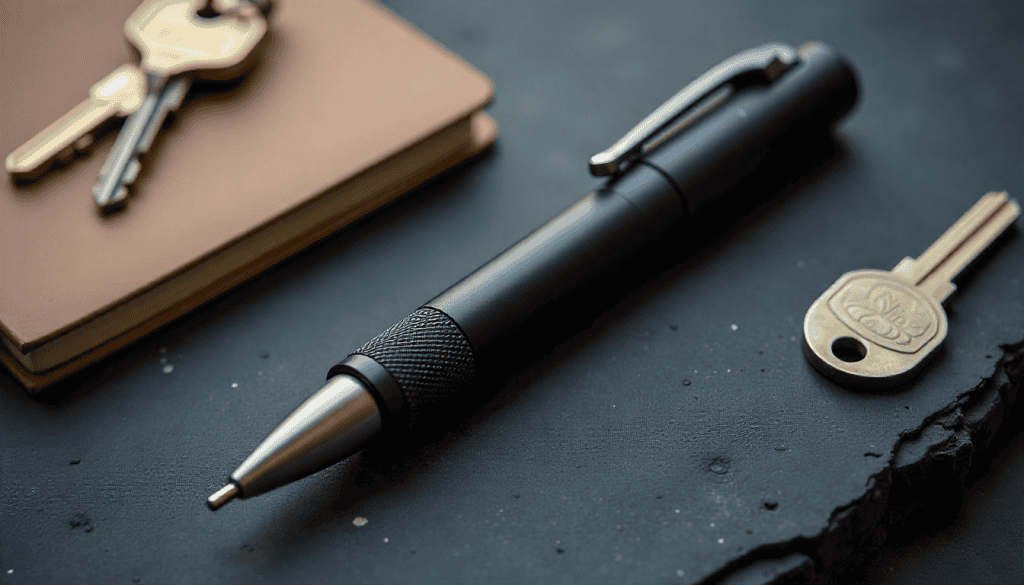
A tactical pen looks like a normal pen—but it’s built tougher. Machined from aircraft-grade aluminum, titanium, or hardened steel, its body doubles as a striking surface. The tip can be pointed for breaking glass or delivering a disabling strike. Most models still use standard ink refills, so they work as a regular writing tool too.
If you’re just starting to explore self-defense gadgets, you might enjoy our previous article, “Walking Alone? Here’s Why Safe Defense Gadgets Give You Peace of Mind.” In that post, we talked about how small, non-lethal tools — like personal alarms, pepper spray, and discreet safety devices — can instantly change how secure you feel when out on your own.
Tactical pens fit perfectly into that same mindset. They’re discreet, practical, and empower you with confidence without drawing unnecessary attention.
Why consider one?
Because it’s multipurpose. It’s a functional everyday carry item that also counts as a simple self-defense tool. You don’t need bulky gear. No loud gadgets. Just something in your pocket that helps you stay prepared—whether you’re signing receipts or getting out of a tight spot.
Quick benefits:
- Writes like a normal pen.
- Acts as an improvised glass breaker in emergencies.
- Serves as a compact self-defense tool when needed.
- Often features additional tools: pocket clips, bit drivers, or flashlight tips.
I carry one. I like the confidence it gives. It’s sensible, not showy.
The Legal Aspects of Using Tactical Pens: Know the Rules Before You Buy
Short answer: legality varies. Big idea: know your local rules before you buy.
Tactical pen legality depends on jurisdiction. In many places, a tactical pen is legal because it’s marketed and sold as a writing instrument. In others, laws are stricter—especially where any item intended for use as a weapon can be regulated. Airports, courthouses, and certain public venues often ban them. Schools usually do too.
Actionable checklist:
- Check local laws — look up self-defense laws and prohibited items for your city, state, or country.
- Review venue policies — stadiums, transit systems, and government buildings may restrict tactical pens.
- Avoid intent-based problems — don’t advertise your pen as a weapon; use and carry it responsibly. If you brandish it aggressively, that may change how the law sees you.
- Air travel caution — do not pack tactical pens in carry-on luggage. Check TSA and equivalent bodies in your country.
Don’t gamble with legality. A quick search or short call to local authorities can save you a lot of trouble.
How to Choose the Right Tactical Pen for Your Needs
There’s no single “best” tactical pen. There’s the best for you. Start with purpose and build from there.
Core features to evaluate:
- Material & durability: Aircraft-grade aluminum, titanium, or stainless steel resist corrosion and handle impact. If you drop it on concrete, it should survive.
- Weight & balance: Heft matters. Too light and it won’t deliver meaningful strikes; too heavy and it’s cumbersome as an EDC. Aim for balanced weight.
- Tip design: Blunt vs. pointed. A pointed tip is better for glass-breaking and precise strikes; a rounded one can be safer for general carry.
- Grip texture: Grooved or knurled surfaces improve control—vital under stress.
- Refill compatibility: Most tactical pens accept standard ink refills (e.g., Parker, Fisher). That keeps your pen useful long-term.
- Extra features: Glass breaker, screwdriver bits, flashlight heads—choose extras only if they fit your routine.
Best tactical pens for beginners: look for models labeled as “EDC-friendly” or “beginner” that prioritize a comfortable grip, standard refill compatibility, and a durable aluminum body. They’re affordable, lightweight, and easy to use.
Practical tip: hold the pen in a few common EDC positions (writing grip, icepick grip). If it feels awkward, move on. Comfort under stress is crucial.
Tactical Pen Uses: Beyond Self-Defense — Everyday Practical Applications
A tactical pen earns its keep every day. Here’s how.
Writing — Yes, first and foremost it’s a pen. In meetings, interviews, and travel, you’ll value a dependable refill.
Emergency glass-breaking — Car submerged? Need to exit quickly from a vehicle? The hardened tip can shatter tempered glass when other tools are unavailable.
Scene tool — Tight screws, small repairs, prying a stuck zipper—some tactical pens include small bit drivers or pry edges that solve minor mechanical problems on the spot.
Outdoor survival — Use it to create starter sparks (with specialized models), as a fid for ropework, or a striker for firesteel in a pinch. It’s compact and reliable when you can’t carry a toolbox.
Self-defense scenarios — In close quarters, a tactical pen gives reach and leverage. Proper technique matters: strike toward large muscle groups (forearms, thighs) or use controlled pressure to create space and escape. The goal is escape—not confrontation.
Real-world example: a commuter trapped in an elevator experienced a minor panic attack after a stranger’s aggressive behavior. A tactical pen provided a sense of control—just holding it changed the perceived threat level and helped the person stay calm until help arrived.
Actionable drills: practice two grips (writing and icepick) at home. Run a few controlled strikes on a heavy pillow to build muscle memory. Not to injure anyone—just to make your movements instinctive.
Caring for Your Tactical Pen: Maintenance Tips to Ensure Longevity
Treat it like a precision tool. Clean it. Check it. Replace parts.
Maintenance checklist:
- Refill check: Replace ink refills before they fail. Carry spares.
- Periodic disassembly: Every few months, unscrew and inspect O-rings, threads, and seals. Clean out debris with a soft brush.
- Rust prevention: If your model uses steel components, wipe it dry after exposure to moisture and apply a thin film of protective oil if appropriate.
- Grip maintenance: If your pen has rubberized grips, avoid harsh solvents that degrade material. Mild soap and water work fine.
- Function test: Confirm any extra features (bit drivers, glass breakers, flashlight) work properly. Recharge built-in batteries promptly if your model includes electronics.
Pro tip: store your tactical pen where it won’t be crushed or bent. A pocket sheath or protective case extends life and keeps it ready.
Conclusion: Empower Yourself with Knowledge and Consider Adding a Tactical Pen to Your Gear Today!
Tactical pens are deceptively simple. They bridge form and function in a compact package. They’re not a silver bullet. They won’t replace training or situational awareness. But when chosen wisely and carried responsibly, they’re an excellent addition to everyday carry items—useful for writing and surprisingly capable in emergencies.
If you want practicality, legality-aware options, and real-world utility—this is a tool worth considering. I recommend testing a beginner-friendly model first, practicing basic grips in a safe space, and always checking local regulations before carrying one in public. Small decisions like these add up to real preparedness.
Carry smart. Carry legal. Carry something that writes and works when it counts.
Frequently Asked Questions About Tactical Pens
1. What exactly is a tactical pen? A tactical pen is a multipurpose tool designed to function as both a writing instrument and a self-defense device. Made from durable materials like aircraft-grade aluminum or titanium, it can be used for writing, breaking glass in emergencies, or as a striking tool in self-defense situations.
2. Are tactical pens legal to carry? In most places, yes. Tactical pens are generally legal because they are marketed as writing instruments. However, local laws and regulations vary. Some airports, schools, and government buildings may restrict them. Always check your local self-defense laws before carrying one.
3. Can a tactical pen really be used for self-defense? Yes, but it should be seen as a last-resort tool. The hardened body and pointed tip make it effective for creating space and deterring an attacker. However, the main goal is not to fight but to give you a chance to escape safely.
4. What features should I look for in a tactical pen? Beginners should focus on:
- Durable material (aluminum, steel, or titanium)
- Comfortable grip and balanced weight
- Standard ink refill compatibility
- Optional features like glass breakers or LED flashlights
5. Can I travel with a tactical pen on a plane? Most security agencies, including the TSA in the U.S., consider tactical pens prohibited in carry-on luggage because they can be used as weapons. To avoid confiscation, pack them in checked luggage or leave them at home when flying.